Crawler, all-terrain, truck-mounted or rough-terrain? Three questions that point you to the right crane before you hire.
Picking the wrong crane costs time and money: a machine that is too small cannot make the lift, and one that is too big costs more to transport, set up and permit. Before you request a quote, answer three questions.
1. How heavy is the heaviest lift?
Start with the weight of the heaviest load, including slings, spreader bars and hooks. Then remember that a crane’s rated capacity applies only at short radius. The further the load is from the crane, the less it can lift.
2. How far does the load need to travel?
Measure the distance from where the crane can stand to where the load must land, and the height it must clear. Reach and height often decide the crane size more than the load itself.
3. What is the site like?
Ground conditions, access roads, space to set up outriggers and how long the crane will stay on site all narrow the choice.
The main crane types
| Crane type | Typical capacity | Best for |
|---|---|---|
| Crawler cranes | 50 – 1,600 t | Very heavy lifts and long stays on large sites |
| All-terrain mobile cranes | 20 – 1,200 t | Fast set-up, moving between sites on public roads |
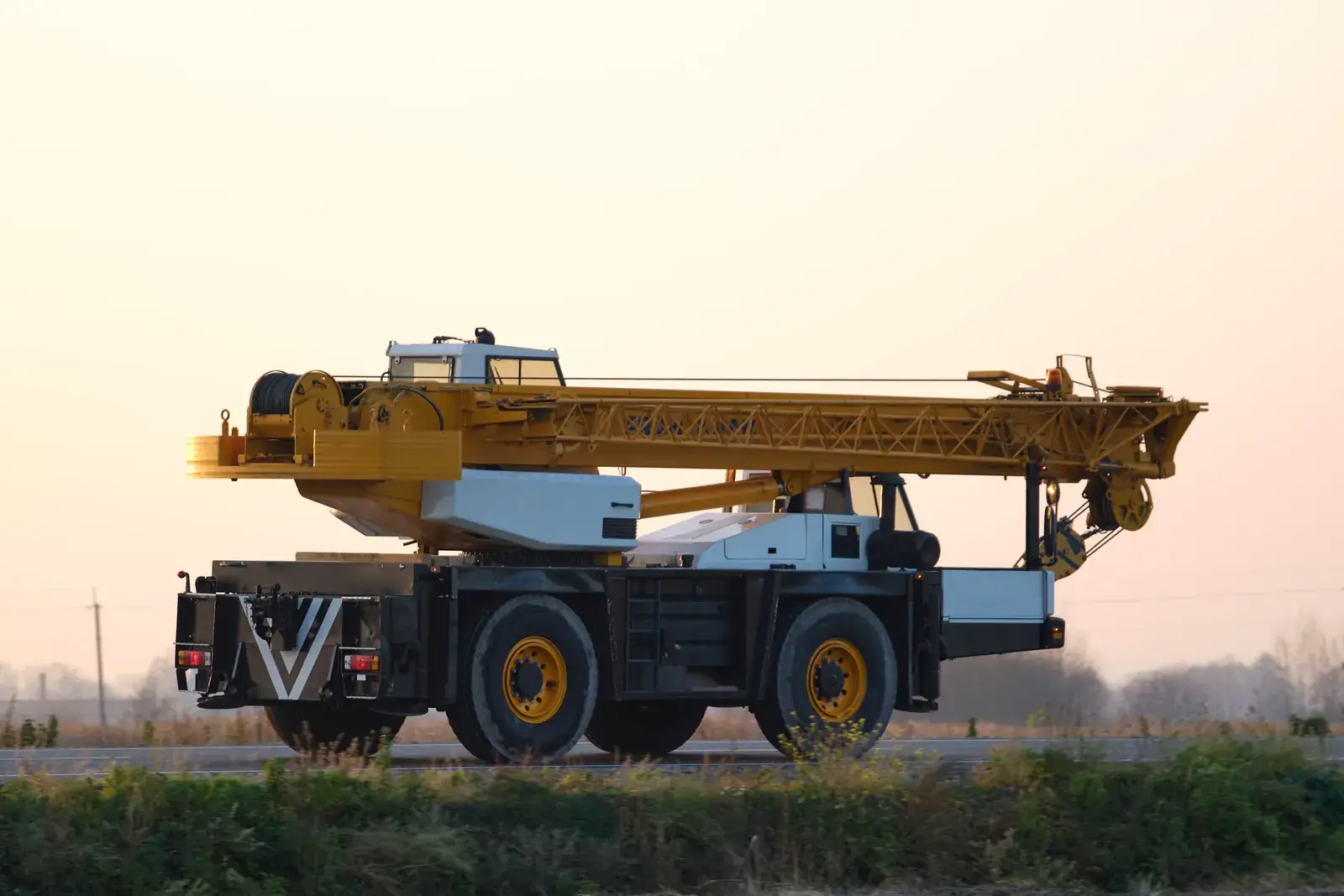
| Rough-terrain cranes | 50 – 140 t | Unpaved and uneven ground |
| Truck-mounted cranes | 5 – 30 t | Quick, short lifts and frequent moves |
| Loader cranes | Up to 20 t | Lifting and delivering materials with one truck |
Capacities are the ranges in the TitanField equipment catalogue.
Plan the lift with us
Send us the load weight, the radius, the location and your dates. Our team will recommend the right crane and arrange transport, operators and rigging support. Request a quote or see our heavy lifting service.